

Codex vs Claude Code in 2026
 Dott
You've got a ChatGPT plan or a Claude plan, maybe both, and an afternoon of work you'd like to hand to an agent. What you want to know is which tool you'll still be happy with on Thursday, when a limit resets early, a release breaks Windows, or the agent quietly stops asking you things.
I build Merlin, which runs Claude Code and Codex on your team's own machines so people can reach them from Slack and Linear. That means I watch both work every day, and I mostly use Claude Code myself. That's my bias.
If you're just here for a quick recommendation, here's the summary.
The short answer
- You already pay for ChatGPT: Codex. Plus gets you the CLI, the IDE extension, cloud tasks and the iOS app, and GPT-6.1 Sol is the default.
- You already pay for Claude: Claude Code. Every paid plan now starts on Opus 5.5, and all current models carry a 1M context window.
- You want the strongest model for hard problems: Claude Code. Opus 5.5 is a clear step above GPT-6.1 Sol, in my own use and in the threads.
- You want to hand work off and review it later: Codex, with cloud tasks and an approval mode that sends decisions to a reviewer agent instead of you.
- You want to watch, steer and tune the agent: Claude Code, which has the deeper set of hooks, subagents, plugins and memory to hook into.
- You hit limits all the time: Claude Code, this month. The usage story flipped in September, and people on every tier now say Claude goes further and runs out less often than Codex.
- You want open source, or to point the agent at other models: Codex. The CLI is Apache-2.0. Claude Code is closed and runs Claude models only.
Codex and Claude Code at a glance
The Users lean column is the one I'd read first. It says which way the people using both tools leaned this month, "Mixed" where they disagreed and "flips" where they changed their minds within days.
| Dimension | Codex | Claude Code | Users lean | Last changed |
|---|---|---|---|---|
| Best for | Handing work off on a ChatGPT plan | Hard problems on Opus 5.5, long supervised sessions | Split | Oct 2026 |
| Default model | GPT-6.1 Sol in the CLI | Opus 5.5 on every paid plan | Claude Code | Sep 2026 |
| Where it runs | CLI, VS Code family, Xcode, JetBrains, ChatGPT desktop app, Codex Cloud, iOS | CLI, VS Code, JetBrains, Claude desktop app, claude.ai/code, iOS and Android as clients | Mixed | Sep 2026 |
| Autonomy by default | Asks for approval, workspace sandbox, network off | Auto mode with a safety classifier, sandbox off | Mixed | Sep 2026 |
| Limits | Five-hour window with published ranges, weekly caps, no five-hour cap on Pro | Five-hour window plus weekly cap, one pool with chat, no published numbers | Claude Code, since late September | Oct 2026 |
| Entry price | Free, Go $8, Plus $20, Pro $100 to $500 | Pro $20, Max $100 or $200 | Codex | Oct 2026 |
| Context | 1,050,000 on the API side, not documented inside Codex | 1M on every current model | Claude Code | Oct 2026 |
| Making it yours | AGENTS.md, skills, plugins, 12 hook events, MCP client | CLAUDE.md and AGENTS.md, skills, plugins, 33 hook events, MCP client and server | Mixed | Sep 2026 |
| Open source | CLI yes, IDE extension and cloud no | No | Codex | Unchanged |
| Team controls | SSO and MFA from Business, SCIM and RBAC on Enterprise | SSO from Team, SCIM and zero data retention on Enterprise | Mixed | Unchanged |
Prices and limits were seen on October 11, 2026. Both pricing pages changed at least twice in September, so follow the links in each section for the current number.
Where things stand in October 2026
A snapshot of September and the first ten days of October.
Codex
- Three model changes in four weeks: GPT-6 Astra became the CLI default on September 4, GPT-6 Sol and GPT-6 Luna arrived on September 22 "at lower token prices than their GPT-5.6 predecessors", and GPT-6.1 Sol launched on September 29 and took over the default. GPT-5.5 leaves Codex on October 14. Ultrafast for GPT-6.1 Sol shipped on October 8, for Pro $500 and Enterprise only.
- The limits story ran through OpenAI's own Codex lead on X: new $200 Pro subscriptions were paused on September 11 because "These put the most strain on our systems", reopened on September 30 "but together with it we are also changing how we calculate the usage for it", and a "Global reset landing tomorrow 10am PST for all paid ChatGPT accounts" followed on October 2.
- DevDay on September 29 added Dots (always-on agents), reusable cloud environments and ChatGPT in Slack and Teams. The docs moved to learn.chatgpt.com, and Codex now shares usage, credits and the desktop app with ChatGPT Work.
- Day to day, the feel changed with each model. Astra was the slow, compaction-heavy one, and GPT-6.1 Sol is the one people now describe as the daily driver.
- The
codex mcp-servercommand was removed on September 5. Codex still connects to MCP servers, it just no longer is one.
Claude Code
- Four models in six weeks: Fable 5.1 on September 1, Opus 5.5 on September 22, which also became the default on Pro and Team Standard (it already was on Max), Sonnet 5.5 on September 28 and Haiku 5.5 on October 7. All four carry a 1M context window.
- The biggest behavior change of the month: since 2.1.283 and 2.1.284 (September 25 and 28), interactive terminal and VS Code sessions start in auto mode on every plan and provider. A classifier model reviews actions instead of prompting you.
- AGENTS.md is read when a project has no CLAUDE.md, since 2.1.277 on September 18.
- No price change, but the usage story flipped. The complaint that defined Claude Code for most of the year, a Max plan running dry in an afternoon, gave way to people on $20, 5x and $200 plans saying Claude now goes further than Codex and runs out less often.
- Day to day, the change people notice first is that it stops asking. A session in auto mode runs without prompts until the classifier blocks something, and then it goes back to asking you.
My read: September went Claude Code's way. Codex spent the month managing demand in public. Claude Code shipped the model people now switch back for, stopped running out first, and changed how much it asks you, which matters more than any launch if you leave it running on your laptop.
Where the work runs
Both tools are everywhere now. The difference is framing. Codex is a feature of ChatGPT: the desktop app is the ChatGPT app, Slack is "@ChatGPT" with cloud delegation, and your usage is shared with ChatGPT Work. Claude Code is a product line of its own, with the CLI at the center and a Code tab in the Claude desktop app, cloud sessions at claude.ai/code and a separate Slack product, Claude Tag, for Team and Enterprise.
Codex
- Surfaces, per the docs: the CLI, an extension for VS Code, Cursor and Windsurf, native integrations in Xcode and JetBrains, the ChatGPT desktop app on macOS, Windows and Linux (Linux in preview), Codex Cloud, and the iOS app for starting tasks, approving actions and reading diffs.
- The CLI is open source under Apache-2.0, written in Rust, and shipped 25 stable releases between September 1 and October 9. The IDE extension and the cloud are "Not open source".
- An API key works for the CLI, SDK and IDE extension, but "No cloud-based features (GitHub code review, Slack, etc.)" (pricing).
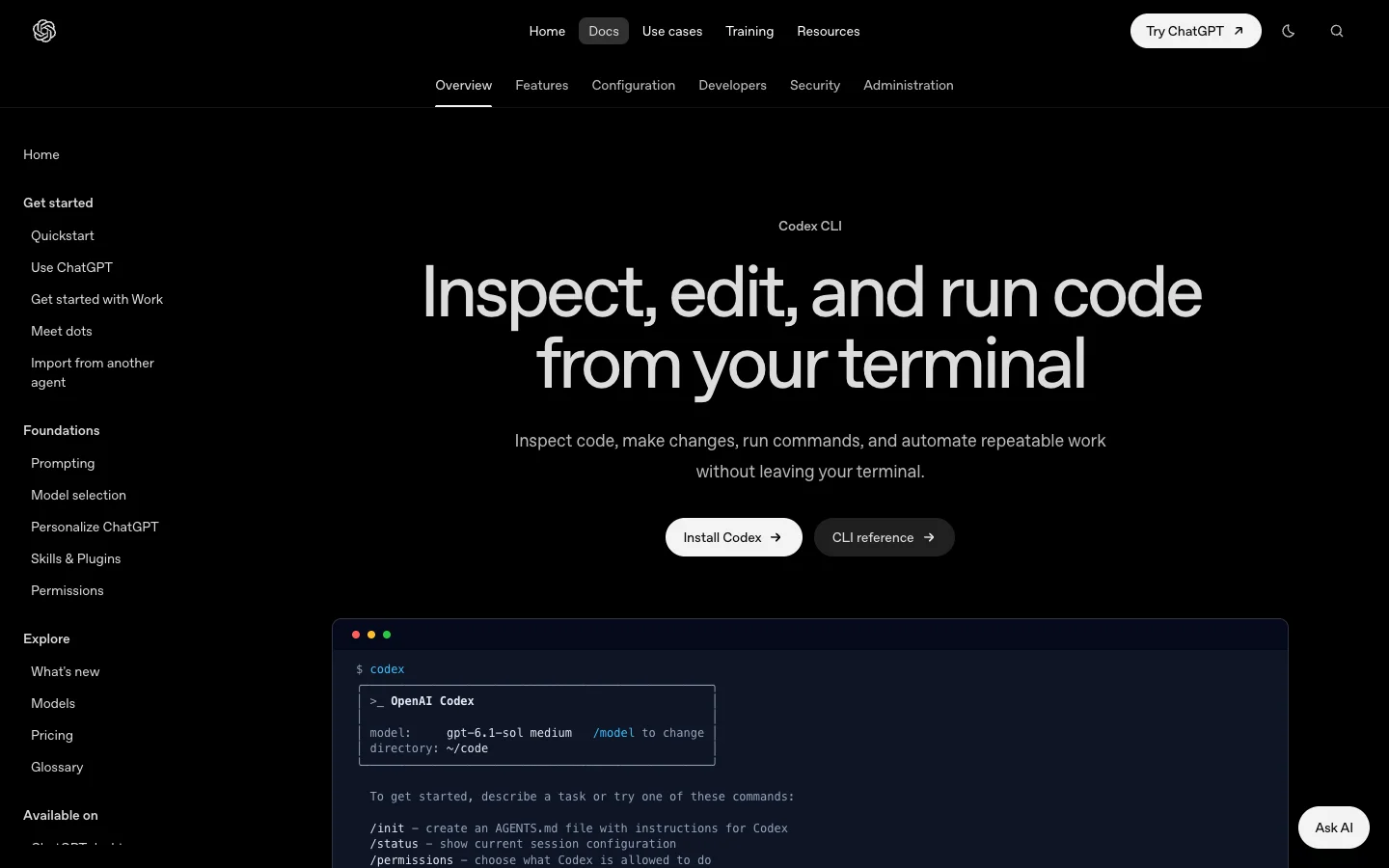 Codex's docs moved to learn.chatgpt.com in September. This is the CLI overview page.
Claude Code
- Surfaces, per the overview: the terminal CLI, VS Code (which bundles its own copy of the CLI) and JetBrains, the Code tab in the Claude desktop app on macOS, Windows and Linux (beta), cloud sessions on Pro, Max and Team, the iOS and Android apps as clients, a GitHub Action, and the Agent SDK.
- Not open source, and Claude models only. Bedrock, Google Cloud and Microsoft Foundry are supported, but lose cloud sessions, routines, fast mode and the analytics dashboard.
- The desktop app runs parallel sessions with a per-session git worktree, and
claude --desktophands a terminal session to it.
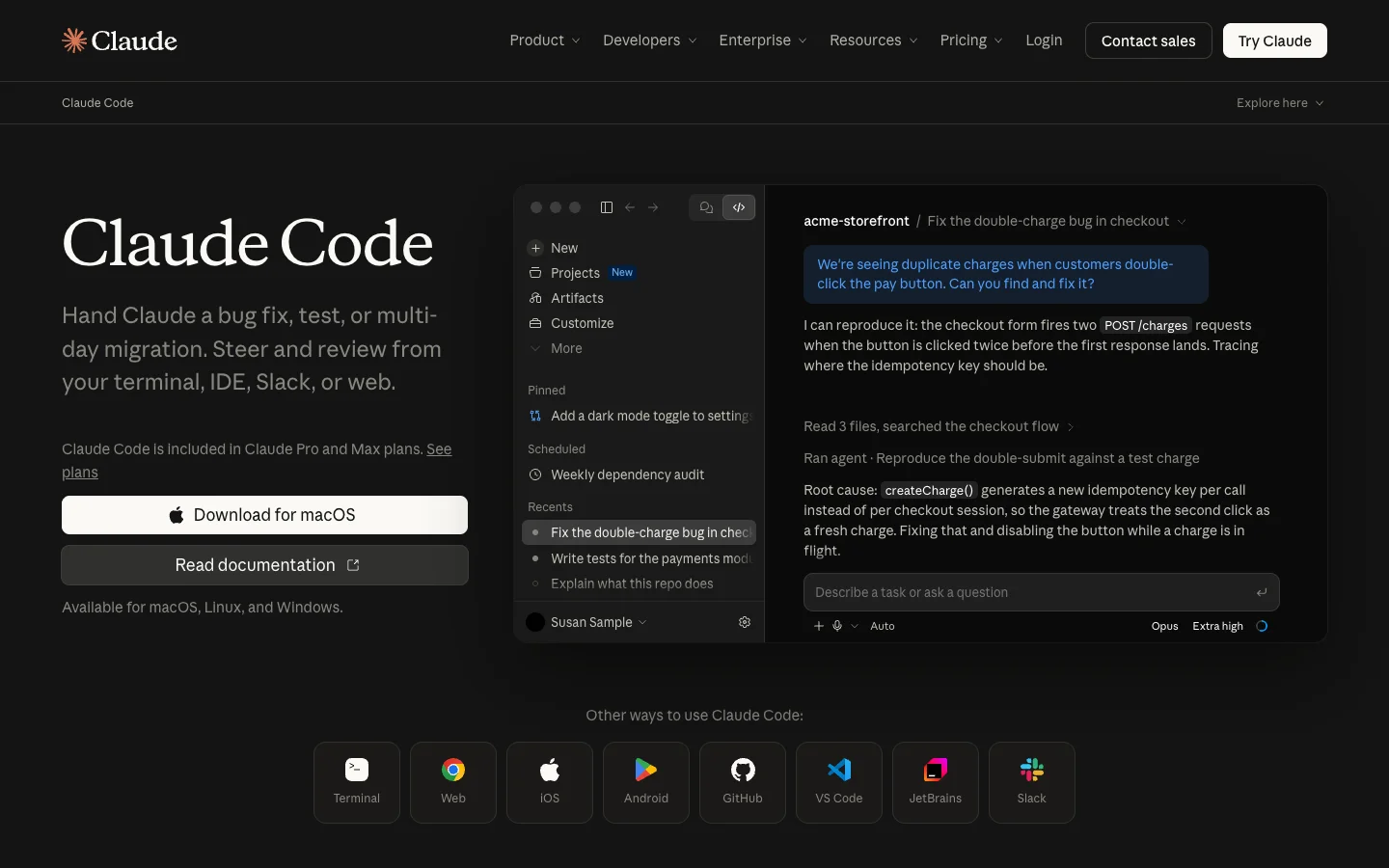 Anthropic now lists eight ways to use Claude Code, Slack included, which is Claude Tag for Team and Enterprise.
What people say
- "At least Codex CLI in rust uses 80-100MB which is still not great but a big improvement." (Hacker News, September 29, against a Claude Code CLI the commenter measured at about 500 MB idle.)
- Gergely Orosz, on X: "Anthropic is closed everything" versus "Codex is open source, you can use other models" (September 29).
- The contrarian take with 1.8 million views: "The terminal era is over imo. It's the wrong interface for coding agents." (Yuchen Jin on X, October 3).
My read: pick by where your subscription already lives and where the work is. The terminal is still where both are most capable, and the desktop apps are the surface each vendor is investing in. If openness or a non-vendor model matters to you, that's Codex, full stop.
How much they do on their own
This is where the two made opposite bets in September. Codex kept its default conservative and added a way to delegate approvals to another agent. Claude Code made a classifier the default gatekeeper for everyone.
Codex
- The default is Ask for approval: a workspace-write sandbox, approvals on request, and "By default, the agent runs with network access turned off."
- "Approve for me" sends eligible approval requests to a reviewer subagent instead of you. "Full access" turns everything off, and admins can forbid it with a managed
requirements.toml. - OS-level sandboxes on all three platforms, including native Windows on Windows 11.
/plantoggles plan mode, and subagents are on by default.
Claude Code
- Since late September, interactive sessions start in auto mode: "A separate classifier model reviews actions before they run". If it blocks an action three times in a row or twenty times in total, Claude Code goes back to asking you.
- Manual mode, plan mode, an accept-edits mode and a bypass mode still exist, and bypass refuses to start as root. The docs are candid: "Auto mode reduces permission prompts but does not guarantee safety."
- The sandbox is off by default, runs on macOS, Linux and WSL2, and "On native Windows, Claude Code runs commands unsandboxed."
What people say
- On Codex: "randomly enters safe sandbox mode or whatever multiple times a day per session - it just starts seeing everything as read-only" (Hacker News, October 7).
- Also on Codex, the other direction: it "used over an hour (after asking for a confirmation like once every 10secs)" (X, October 9).
- One Tell HN post from September 22 claimed Claude Code accepted and signed a contract on the author's behalf without asking. Its 98 comments argued mostly about whose fault that was.
My read: Codex's default is safer on paper and Claude Code's is faster day to day, and both will still interrupt you when you least expect it. If you develop on Windows, Codex is the only one of the two with a sandbox there.
Usage limits and what they cost
The number one topic wherever the two get compared, and the one that moves fastest. Here are the prices as of October 11, 2026. Codex: Free, Go at $8, Plus at $20, Pro at $100, $200 or $500, Business at $20 per user per month billed annually. Claude: Pro at $20 ($17 annual), Max at $100 or $200, Team at $20 or $100 per seat. Both sell extra usage, Claude at API rates and Codex as credits priced per million tokens.
Codex
- A five-hour window with published ranges: on Plus, "15-160" local messages of GPT-6.1 Sol per five hours, "5-45" of Astra, "350-3,000" of Luna, and "Weekly limits may also apply." Pro "currently" has no five-hour limit.
- If you hit the cap mid-task, "the agent will be able to continue working on that turn, subject to fair use limits."
- Credits are priced per million tokens and shown on the pricing page. Ultrafast on Pro $500 costs eight times the included usage.
Claude Code
- "Every plan has usage limits that reset on a rolling five-hour session window, and paid plans add weekly limits on top." Chat and Claude Code draw from one pool. No numbers are published.
- Fable models are free within 50% of the weekly limit on Max, and cost usage credits on Pro. Fast mode and Code Review bill only to credits.
- The Max plans' monthly API credits can't be used in Claude Code.
What people say
- September 19: "OpenAI quotas have cratered, probably due to Astra-induced demand. Claude plans now offer more usage." (Hacker News)
- September 22, same site, on the $200 plans: "Winner right now is Codex by a mile" (Hacker News), and on the $20 plans the same day: "I get so much more usage with Claude. It's night and day for me. Codex runs out constantly" (Hacker News).
- "Then they do a new model launch, issue quota resets all around, and it's a party for 2-3 weeks before things return to normal." (Hacker News, September 22)
- "the current state of my $200 codex account 1. 100% usage limit remaining 2. 3 banked resets" (X, September 27), one week before "Cancelled my 200$ codex plan, switched to Claude code 100$ plan." (X, October 4)
- "I'm tired of switching between Codex and Claude Code whenever I hit the limits. When I switch I have to give all the context again." (X, September 20, 71,000 views)
My read: for most of the year Claude Code was the one that ran out, and Max subscribers hitting their cap in an afternoon was the standing joke. This month the reports flipped. On the $20 plans, the 5x plans and the $200 plans, people say Claude's usage goes further and is harder to exhaust than Codex's, and the Codex side of the ledger is a September of paused subscriptions, a recalculated Pro plan and a global reset. Codex still publishes its ranges and Pro $200 still has no five-hour cap, so if you run Luna all day it's hard to beat on volume. For Opus-class work, Claude Code is the plan you keep when the launch bonus ends.
Code quality, speed and context
No scores here. If you want them, Artificial Analysis runs both harnesses on its Coding Agent Index with cost and time per task, and the Terminal-Bench numbers quoted around the web disagree with each other because each page picked a different model and effort level. What follows is what people report, and the one structural difference that didn't flip all month.
Codex
- Three headline models, GPT-6 Astra, GPT-6.1 Sol and GPT-6 Luna, with reasoning effort from Light to Ultra, where Ultra "uses subagents to handle separate parts of a complex task in parallel".
- The API pages list a 1,050,000-token window for all three. The Codex docs never state the window you actually get, and people who watched it on Astra put it near 250K.
- Compaction is automatic with a configurable threshold, and
/compactruns it by hand.
Claude Code
- Opus 5.5 is the default everywhere, and Fable 5.1, Opus 5.5, Sonnet 5.5 and Haiku 5.5 all run with a 1M window at no premium. Auto-compaction kicks in at about 967K tokens.
- Compaction keeps CLAUDE.md, memory and MCP tools, re-reads up to five recently edited files, and
/rewindrestores a checkpoint of both the conversation and your files. - Fast mode, up to 2.5x faster on Opus, is credits-only on subscriptions.
What people say
- "Fable is on a class of its own when it comes to coding and orchestration, but it runs out pretty quick" (Hacker News, September 22).
- "I couldn't deal with Claude's Ted Talk responses to literally everything." (Hacker News, September 22), and from a different commenter: "Much saner English, much better at execution" (September 12), both about moving to Codex.
- "I get 1M context with Claude and ~256k with Astra." (Hacker News, September 23) and "252k is just not enough. Codex's compaction is very good, fwiw, but it happens so frequently" (September 22).
- "The Claude Opus 5.5 is being nerfed" (X, September 28) two days before "I'm going back to Claude Code because Opus 5.5 is really good." (X, September 30)
- "Codex is behind Claude Code in terms of critical features like seeing what's going on in subagents." (Hacker News, September 22)
- From a Codex fan, on launch day: "GPT-6.1 Sol even though can't beat Sonnet 5.5" (X, September 30).
My read: Opus 5.5 is a clear step above GPT-6.1 Sol on hard work. That's my own experience day to day, and it's what the people moving back to Claude Code say, down to the Codex fan who concedes Sol doesn't beat Sonnet 5.5, let alone Opus. GPT-6.1 Sol earns its keep on execution and on cost. Style still cuts both ways: Claude talks more, Codex says less. And the edge that held all month is context: Claude Code documents 1M on every model and tells you what survives compaction, and Codex doesn't say.
Making them yours
The feature lists mirror each other now. Both read AGENTS.md, both have skills, plugins, hooks and MCP, both spawn subagents and work in git worktrees. The differences are in depth and defaults.
Codex
- AGENTS.md with override files and a 32 KiB cap, skills as
SKILL.mdfolders in~/.agents/skillsinvoked with$name, and plugins that bundle skills and MCP servers (not available in the IDE extension). - Hooks are on by default with 12 lifecycle events. MCP as a client with OAuth sign-in. Local memories are off by default.
- Because the CLI is open, you can point it at Bedrock or a gateway and at models OpenAI didn't train.
Claude Code
- CLAUDE.md at managed, user, project and local levels plus path-scoped rules, AGENTS.md as a fallback, and auto memory on by default in local sessions.
- Hooks of five types across 33 events, subagents with their own context and an
isolation: worktreeoption, plugins from an official marketplace that's added on first run, output styles, and MCP as both client and server (claude mcp serve). - Settings have a documented precedence, and admins can lock permission modes, models, providers and MCP servers from a managed file.
What people say
- Gergely Orosz, 349,000 views: it "took the Claude Code team 16 months LONGER (!!) to add support for AGENTS.md than OpenCode & Codex" (X, September 19).
- "Codex follows the AGENTS.md far better." (Hacker News, September 19)
- People keep skills in one directory and symlink it so both tools see them, and grumble about typing
/in one and$in the other (Hacker News, September 7).
My read: Claude Code gives you more to hook into, and Codex is stricter about the instructions you give it. Write one AGENTS.md, keep it short (Codex stops reading at 32 KiB and Anthropic suggests 200 lines), put your skills in one folder, and either tool will behave.
Living with them day to day
A day with either tool has the same shape: you hand over a task, you get interrupted a few times, you hit a cap at the worst moment, and you pick the session back up tomorrow. The two differ in where the friction lands.
Codex
- Speed on a subscription is the thing people measure. One user clocked GPT-6.1 Sol at "22 t/s" in Codex against "73 t/s" for the same model through the API, with Opus 5.5 in Claude Code at about 97 (X, September 30). Fast mode and Ultrafast exist to close that gap, at a higher usage rate.
- Interruptions come from the sandbox: a request to leave the workspace or to reach the network stops the run until you answer, and since September 3 a warning shows up when less than half of the five-hour allowance is left.
- The terminal UI has its habits, like follow-up inputs you have to reach with a key chord, and the ChatGPT desktop app is where new conveniences land first: parallel projects, worktrees, voice, a usage dashboard.
Claude Code
- Since auto mode became the default, a session mostly runs without asking. Interruptions come from the classifier, and from the tool itself when it decides to compact a long session or stop a background task.
- It talks more than Codex. People who switched mention the length of its replies before they mention anything about code.
- Long sessions are its strength: a 1M window on every current model, compaction that keeps CLAUDE.md, memory and your recent files, and
/rewindwhen the last ten minutes went wrong. The CLI is also the heavier process of the two, at a few hundred megabytes per idle session by one commenter's count.
What people say
- "The hardest part of vibe coding is Surviving the last 10% of your AI limit." (X, September 21)
- "I hate having to go back to Codex CLI and hit ⌥ ↑ to read follow up inputs." (X, September 11)
- "I switched to Claude. Opus 5.5 was causing fomo anyway. This was the trigger. I admit I have zero loyalty" (Hacker News, September 25, written while Codex was down for a stretch).
- "Both codex and Claude code, are slow, buggy [...] (and I say that as someone who still heavily uses both for work" (Hacker News, September 30).
My read: Codex changes under you more often, because it ships several times a week and the model lineup moved three times in a month. Claude Code is steadier from one day to the next and chattier within the day. Whichever you run, keep the other one installed, because the person in that last quote is most of us.
Which one should you pick
I've always found comparisons like this one to be a starting point. Three questions, in order, settle most cases.
- Which subscription do you already pay for? Both tools come with their vendor's plan, and there's no crossover: you can't run Claude Code on a ChatGPT plan or Codex on a Claude plan. API keys work in both CLIs, though Codex loses its cloud features that way. If you pay for one, start there.
- Where does the work need to run? On your own machine, both are equal. In a cloud sandbox, Codex Cloud starts at Plus and Claude's cloud sessions at Pro, both GitHub-only. On Windows, Codex has a sandbox and Claude Code doesn't. If the work needs to run on a teammate's machine, with their repositories, credentials and MCP servers, and be asked for from Slack or Linear, that's the gap I build Merlin for. It drives the Claude Code or Codex already installed there, and model usage stays on each machine owner's own plan (how it works).
- How do you want to work with it? Hand off and review later: Codex, with cloud tasks, Approve for me and Full access. Watch and steer: Claude Code, with plan mode, manual mode, rewind and a hook for almost every moment of the loop.
The most common answer in the threads is both at once. People run Claude for planning and review and Codex for execution, or the reverse, and OpenAI ships an official Codex plugin for Claude Code that adds /codex:review and /codex:rescue to your Claude session on a Free ChatGPT account or up. "Every engineer I know switches easily between Codex and Claude Code when one gets better than the other." (Hacker News, October 9)
Three things most comparisons skip
- Limits are a capacity policy. OpenAI paused new $200 subscriptions on September 11, reopened them on September 30 with a new usage calculation, and reset everyone on October 3. Anthropic publishes no numbers at all, and yet it's the side that stopped running out this month. Any limit figure you read, including mine, has a date on it for a reason.
- Style decides more switches than quality. The people who moved to Codex talk about "saner English" and the end of "Ted Talk responses" before they talk about code. The people who moved back talk about Opus 5.5 and the 1M window. Try each one's default voice on your own repository for a day before you read another benchmark.
- Nobody is loyal, and the handoff is the real gap. "Being loyal to a particular model/harness seem unwise to me." (Hacker News, September 12) The painful part of switching is re-explaining the task, so keep your instructions in AGENTS.md and your skills in one folder, and the switch costs you a
/resume.
FAQ
Not as a whole. Codex is cheaper to start, open source at the CLI, and better at being left alone. Claude Code has the stronger model in Opus 5.5, the longer documented context, the deeper customization, and this month the usage that goes further. Users switched in both directions in September, and the later switches went toward Claude Code.
Codex starts lower: Free and Go at $8 get GPT-6 Luna in the desktop app, and Plus at $20 gets the CLI, the IDE extension, cloud tasks and the iOS app. Claude Code starts at Pro, $20 a month or $17 billed annually. At the top, Codex Pro runs $100 to $500 and Claude Max $100 or $200. Both bill extra usage at API rates. Prices seen on October 11, 2026.
It changed three times in September. By the end of the month the reports pointed at Claude Code: people on $20, 5x and $200 plans say Claude goes further and runs out less often than Codex, after a year in which Claude was the one that ran out. Codex publishes five-hour ranges per model and Pro has no five-hour cap. Check the dates on any claim, including the ones on this page.
Yes, and many people do. Both read AGENTS.md, both read skills from a folder you can share with a symlink, and both work in git worktrees. OpenAI's official plugin runs Codex reviews and tasks from inside Claude Code. The cost is context: when you switch mid-task you explain the task again.
Both are MCP clients with OAuth sign-in and local or remote servers. Claude Code can also act as an MCP server with claude mcp serve. Codex removed its MCP server on September 5, 2026 and points integrations to its app server instead.
The Codex CLI is, under Apache-2.0, along with the SDK and the skill and plugin formats. The Codex IDE extension and Codex Cloud are not. Claude Code is not open source, though the Agent SDK and the sandbox runtime are published packages.
Anthropic says it trains on data from Free, Pro and Max accounts when the training setting is on, Claude Code included, and does not train on Team, Enterprise or API usage. OpenAI's Business and Enterprise plans state no training on business data by default. For a personal ChatGPT plan, check the data controls in your settings.
No. Each tool signs in with its own vendor's account. The only crossover is an API key, which works in both CLIs, and the Codex plugin for Claude Code, which still needs its own ChatGPT or API sign-in.
That's my October read. If you're on Claude Code and curious, the Codex plugin is the cheapest way to find out what you're missing, and the reverse is a $20 month. Tell me what I got wrong and I'll fix it.
Edition history
- October 2026 (published October 12). First edition. Starting positions: Claude Code leads on model quality (Opus 5.5 over GPT-6.1 Sol), documented context and, since late September, usage that goes further. Codex leads on entry price and openness. Autonomy and customization have no clear user lean.
Try Merlin for free
Hand work to Claude Code and Codex from Slack, Linear and GitHub. Free for 14 days, no API keys, no card required.
Get started for free