

Best Viktor Alternatives in 2026
 Dott
Viktor, the AI coworker at viktor.com (unrelated to the engineering low-code platform of the same name), makes a great first impression. You drop it into Slack or Microsoft Teams, ask for a dashboard or a script, and a few minutes later a finished deliverable lands in the thread. Then the second week arrives: you watch a single meaty project eat 5,000 credits, your engineers realize the cloud sandbox can't see their local services, or your security team notices that connecting one person's inbox shares it with the whole workspace.
When you start looking for a Viktor alternative, the right pick depends entirely on which of those friction points pushed you out: the credit bill, the cloud-only sandbox, code work that belongs in GitHub and Linear, or workspace-wide permissions.
If you're just here for a quick recommendation, here's the summary.
The short answer
- Your engineers already use Claude Code or Codex: Merlin. The team asks in Slack, Linear or GitHub, the work runs on your own machines with your real setup, and model usage stays on the Claude or ChatGPT plans you already pay for.
- You're on Claude Team or Enterprise and want Anthropic's own agent: Claude Tag.
- You want Slack and Linear requests to end in tested pull requests: Indent.
- You want Viktor's model with stricter approvals and a $50 start: Dash.
- You want to stop paying for AI twice: Type or Rerun, which both let you plug in an existing Claude or ChatGPT subscription.
- You want no new vendor at all: Slackbot (on Business+ or Enterprise+) or ChatGPT (Dots).
The 12 Viktor alternatives at a glance
Here is the full roster in one table, where "Model usage paid through" is the column I'd read first.
| Alternative | Best for | Ships code? | Runs on | Model usage paid through | Starts at |
|---|---|---|---|---|---|
| Merlin | Teams already on Claude Code or Codex | Yes, via Claude Code or Codex | Your team's own machines | Each machine owner's Claude or ChatGPT plan | $9 a month per workspace, 14-day trial |
| Claude Tag | Claude Team and Enterprise shops | Yes, draft PRs | Anthropic's sandbox | Org usage balance | Usage, needs Claude Team or Enterprise |
| Indent | Slack or Linear to tested PR | Yes, tested PRs | Indent's sandbox or your computer | Org usage credits | Usage, no seats |
| Type | Shared automations on Claude and Codex | Yes, commits and PRs | Type's cloud VMs | Your Claude or Codex subscription, or credits | $50 a month for 2 members |
| Dash | Viktor's model with approval-first defaults | Yes, PRs held for approval | Dash's cloud sandbox | Workspace credits | $50 a month, $100 free credits |
| OpenTag | Model routing with per-person permissions | Through Conductor | OpenTag's cloud | Workspace credits | $50 a month, 7-day trial |
| Rerun | Cheapest start for small businesses | Not its focus | A private cloud machine in Europe | Your Claude or ChatGPT subscription, or credits | $29 a month |
| Lindy | Ops and GTM across Slack, email and iMessage | Not its focus | Lindy's cloud | Credits, per active user | $29.99 a month per active user, $50 free credits |
| Stilla | The most surfaces for a flat price | Yes, opens PRs | Stilla's cloud sandbox | Org credits | $40 a month per org |
| Dust | A fleet of governed custom agents | No | Dust's cloud, US or EU | Per-seat credits | Free seat, Pro from €24 per seat |
| Slackbot | No new vendor | Through Slack Code partners | Slack's cloud | Included in your Slack seat | Slack Business+ at $15 per user |
| ChatGPT (Dots) | Teams already on ChatGPT | Via Codex Cloud | OpenAI's cloud | Included in your ChatGPT plan | ChatGPT Pro from $100 a month |
These are the list prices I saw on October 27, 2026.
Why teams look past Viktor
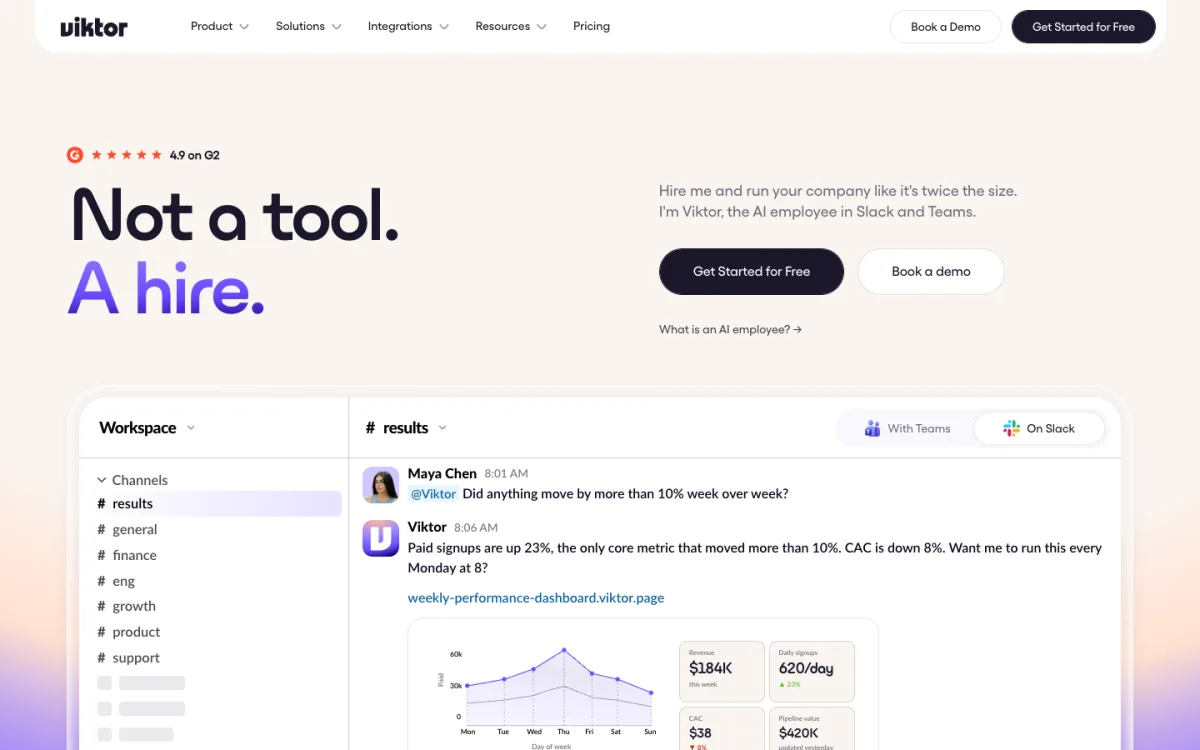 Viktor sells itself as a hire that returns finished work from its own cloud.
Viktor earned its $75M Series A led by Accel in May 2026 for good reasons. It lives in Slack, Microsoft Teams and Discord, plus its own web and desktop apps, and returns actual deliverables (product overview): PDFs, spreadsheets, marketing campaigns, pull requests, and hosted internal web apps with their own login called Viktor Spaces. It connects to 9,800+ tools via managed connectors, keeps a shared team memory, asks before high-stakes actions like sending emails or deploying to production, and runs on frontier models like Claude Opus 5.5, GPT-6.1 Sol and Grok 4.7 (changelog).
When a team decides to move on anyway, it's almost always for one of five reasons:
- The credit bill is hard to predict. Viktor sells shared workspace credits as model costs passed through with no markup, and unused monthly credits roll over for one month (pricing). In practice, a multi-step agent loop burns through a balance fast, especially if you switch model presets from Balanced (roughly half the base rate) to Ultra (roughly double). As Fortune noted, credit usage can get costly depending on workload, and early reviewers on Product Hunt and Trustpilot point to burning through credits faster than expected.
- It runs only in Viktor's cloud. Every workspace runs in a sandboxed environment on AWS us-east-1 with no self-hosted or VPC option (security). Anything that lives on your engineers' machines, behind a corporate VPN, or inside a local dev setup stays out of reach.
- Engineering work belongs where engineers already work. Viktor can open a pull request, and its own Viktor vs Claude Code page still tells you to pick Claude Code if your main priority is working directly with a codebase and development tools.
- Access is wide by default. Connected integrations are shared across the workspace, so connecting an inbox or a SaaS account lets the whole workspace query it, while Private Mode remains on the roadmap (Toolradar overview).
- Compliance is still catching up. Viktor is SOC 2 Type 1 compliant on its homepage FAQ, with SOC 2 Type 2 and ISO 27001 still in progress.
Viktor never writes down the dollar price of a credit, but every tier on its pricing selector, from 20,000 credits for $50 to 20,000,000 for $50,000, works out to $0.0025 per credit. That translates Viktor's own task estimates into real dollars:
| Task size | Viktor's credit estimate | Dollar cost at $0.0025 per credit | How many fit in the $100 Team plan (40,000 credits) |
|---|---|---|---|
| Quick task | 100 to 300 credits | $0.25 to $0.75 | 133 to 400 tasks a month |
| Complex workflow | 500 to 1,500 credits | $1.25 to $3.75 | 26 to 80 workflows a month |
| Full project | 2,000 to 5,000 credits | $5.00 to $12.50 | 8 to 20 projects a month |
Four things separate the alternatives below:
- What it can finish: answers and summaries, actions across connected SaaS tools, or tested code and pull requests.
- Where it runs: the vendor's cloud sandbox, a private cloud VM, or your team's own machines.
- Who pays for the model: a vendor credit pool, per-seat allowances, or the Claude and ChatGPT subscriptions your team already pays for.
- Approvals and permissions: whether integrations are shared workspace-wide or scoped to the person asking, and which actions pause for human confirmation.
The 12 best Viktor alternatives in 2026
1. Merlin
Best for teams whose engineers already use Claude Code or Codex.
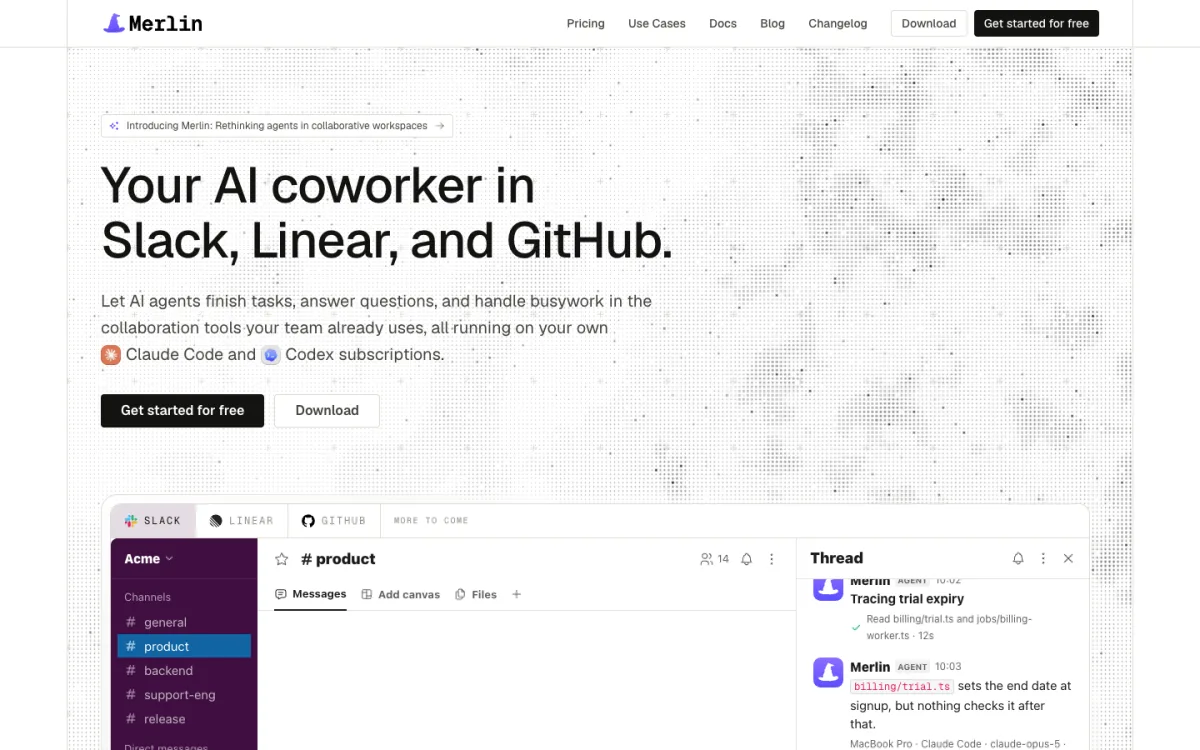 Merlin brings the Claude Code and Codex your engineers already run into Slack, Linear and GitHub.
If your engineers already run Claude Code or Codex, you already have the most capable agent in your company sitting inside their terminals. It has the repos cloned, the local build working, the credentials authenticated and the MCP servers wired up. Merlin turns that exact setup into an AI coworker the whole company can reach. Anyone can @mention Merlin in a Slack thread, DM it, delegate a Linear issue, or tag it on a GitHub issue or pull request. The work runs on a teammate's machine through the macOS or Windows desktop app or the Linux CLI daemon (prerequisites), and the progress and finished result come right back to the thread where anyone can steer it. Where Viktor hands you finished work from its own computer in the cloud, Merlin brings the agents your engineers already trust into the team's conversations, on machines that already have your real environment, without a second AI bill.
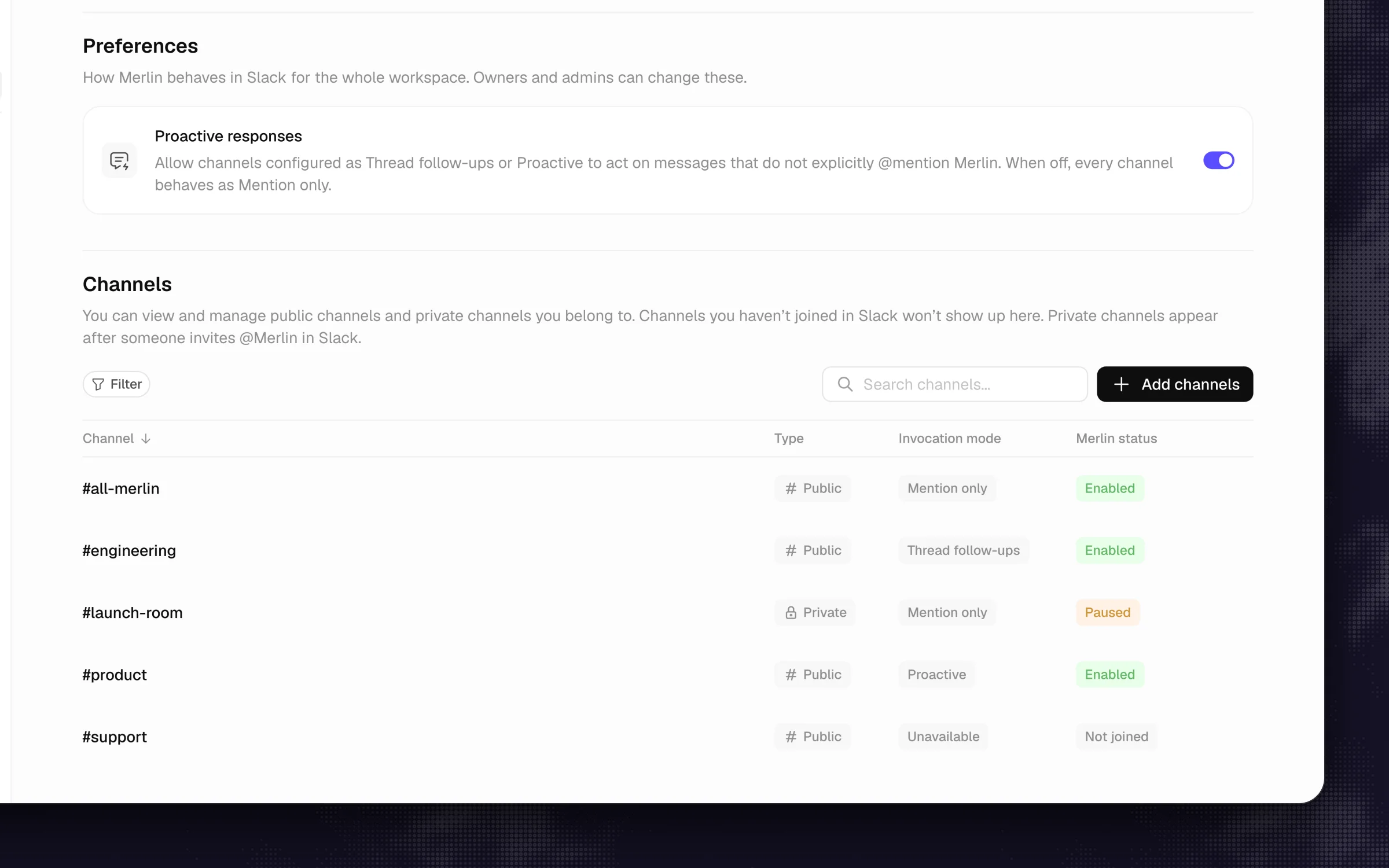 Each channel gets its own response mode, from Mention only to Proactive.
What stands out
- No second model bill: Merlin hosts no model. Model usage stays on each machine owner's own Claude or ChatGPT plan, billed directly by Anthropic or OpenAI.
- Runs in your real environment: Because the client opens an outbound connection from a teammate's machine, the agent works with your local repositories, internal tools, shared skills, automations and per-channel memory. Each machine owner chooses whether their runtime stays private or is shared with teammates (devices and runtimes).
- Granular channel controls: Every Slack channel gets its own response mode: Mention only, Thread follow-ups, or Proactive.
Worth knowing
- Not for you yet if nobody on your team runs Claude Code or Codex on real tasks, or if your team has no engineers.
- It doesn't support Microsoft Teams, and a shared machine has to stay awake and online to pick up requests.
Pricing: Starter is $9 per workspace per month (up to 3 active users, 1,000 requests), Team is $59 (up to 50 users, 5,000 requests), and Scale is $99 (up to 200 users, unlimited requests), with a 14-day Team trial and no card required (pricing, seen on October 27, 2026).
2. Claude Tag
Best for teams on Claude Team or Enterprise.
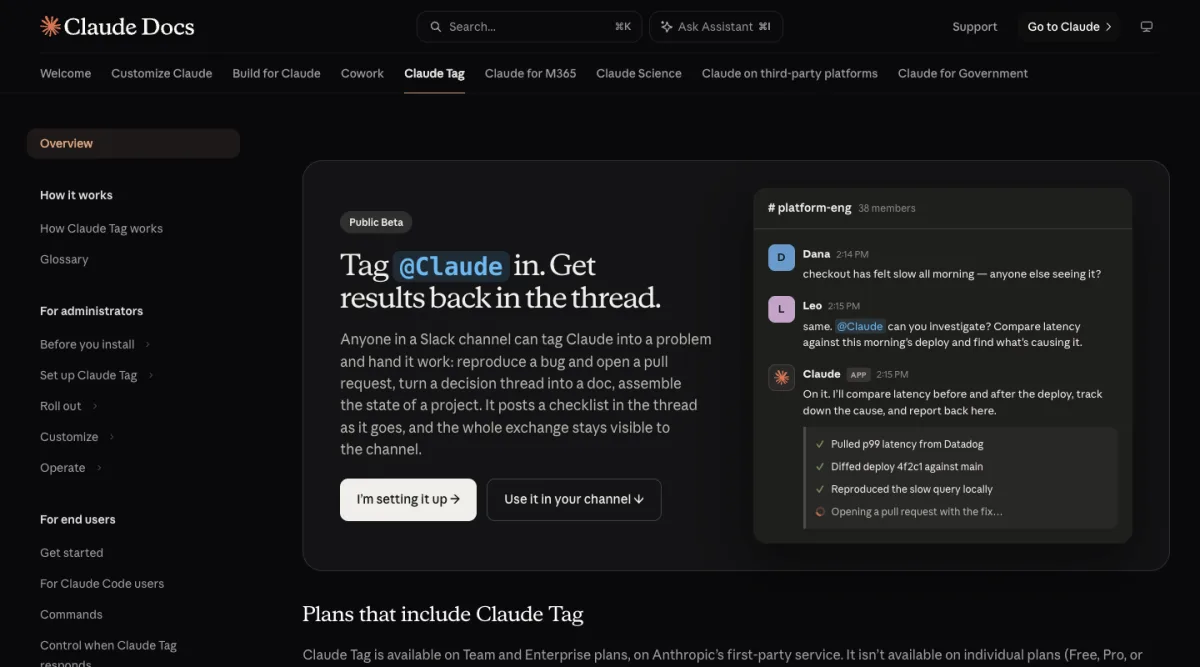 Claude Tag posts a checklist in the thread as it works, in public beta.
Launched in public beta in June 2026, Claude Tag is Anthropic's own Slack teammate. Anyone in a channel can tag @Claude to reproduce a bug, open a draft pull request through the Claude GitHub App, turn a messy decision thread into a clean doc, or pull together a project status update. As it works, it posts a live checklist in the thread so teammates can watch or jump in. Compared with Viktor, it's the same tag-it-in-Slack, get-finished-work idea, built by the model maker itself with channel-scoped memory.
What stands out
- Built into your Anthropic relationship: Adding Claude to Slack carries no per-seat fee if you already have a Claude Team or Enterprise plan.
- Channel-scoped memory and routines: Memory belongs to the specific channel (memory docs), and you can set up scheduled jobs and channel watches.
- Clean cloud execution: Every session runs in an ephemeral sandbox that disappears when the conversation goes idle.
Worth knowing
- Because the sandbox is ephemeral and runs in Anthropic's cloud, it doesn't have your local build tools or internal network access.
- It's Slack-only, runs Claude models only, requires a Claude Team or Enterprise plan, and Anthropic publishes no per-task dollar rate (they suggest running a pilot with an owner-set spend limit to see what your usage costs).
Pricing: no per-seat charge for Slack, with channel work billed by usage against your organization's usage balance on Claude Team or Enterprise (Claude Tag docs, seen on October 27, 2026).
3. Indent
Best for engineering teams that want Slack and Linear requests to end in a tested pull request.
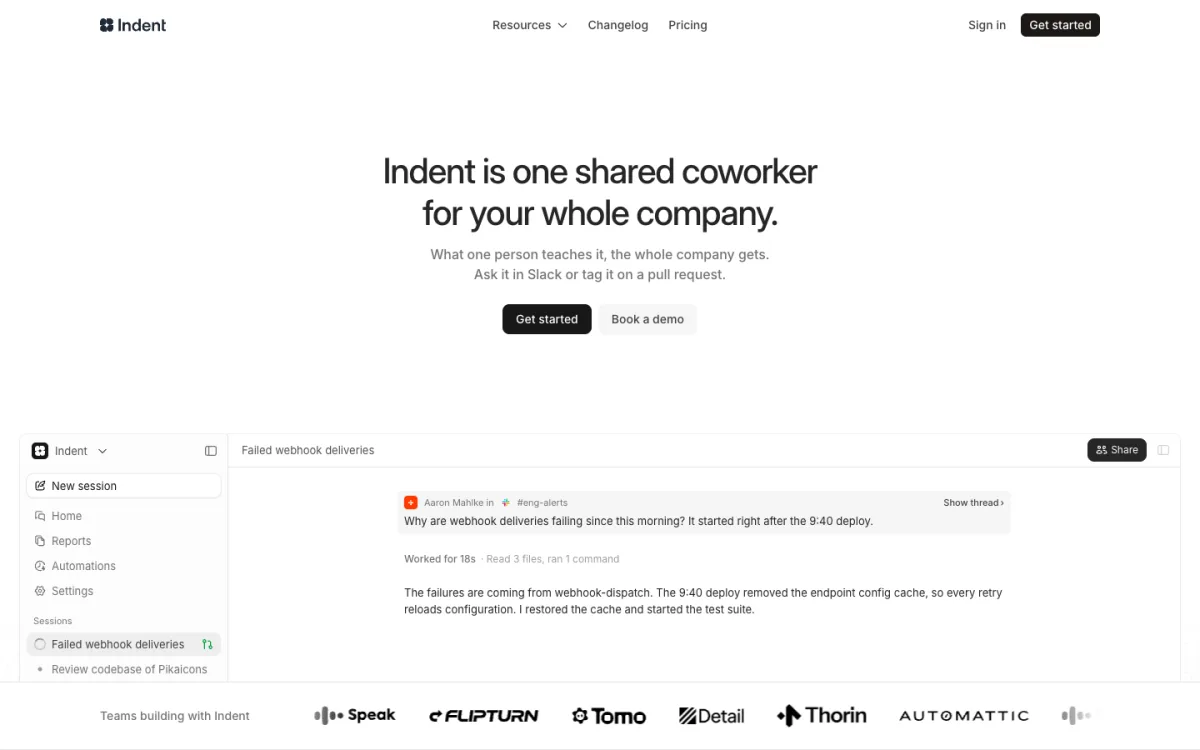 Indent turns a Slack message into a tested pull request.
Indent pitches a simple pipeline on its homepage: "Slack message in. Tested pull request out." When someone flags a bug or requests a change from Slack, Linear, GitHub, the web app, the desktop app or the terminal (docs), Indent explores the codebase, plans the fix, edits the code, runs your linters and test suite, and opens a pull request (writing code). It also reviews PRs and replies inside GitHub comment threads, and Automattic used it to review 937 PRs in 30 days. Compared with Viktor, Indent is built for the codebase first, whereas Viktor is built for business deliverables first.
What stands out
- Flexible runtime options: It runs in a clean cloud sandbox by default, can connect to a configured dev environment, or can run directly on your own computer in a folder you choose via the desktop app (how Indent works).
- Strong defaults for code: Runs on Claude Opus 5 by default (changelog) and checks its own work against your linters and tests.
- No seat counting: The whole company shares the coworker under one org-wide monthly spend limit.
Worth knowing
- Indent's default cloud sandbox "has your code but not your build," so test-heavy work takes upfront environment configuration.
- There is no Microsoft Teams integration, and the pricing page lists no public dollar rates.
Pricing: billed purely by usage with no plans or per-seat fees, capped by a monthly spend limit you set (pricing, seen on October 27, 2026).
4. Type
Best for shared automations that run on your team's Claude and Codex subscriptions.
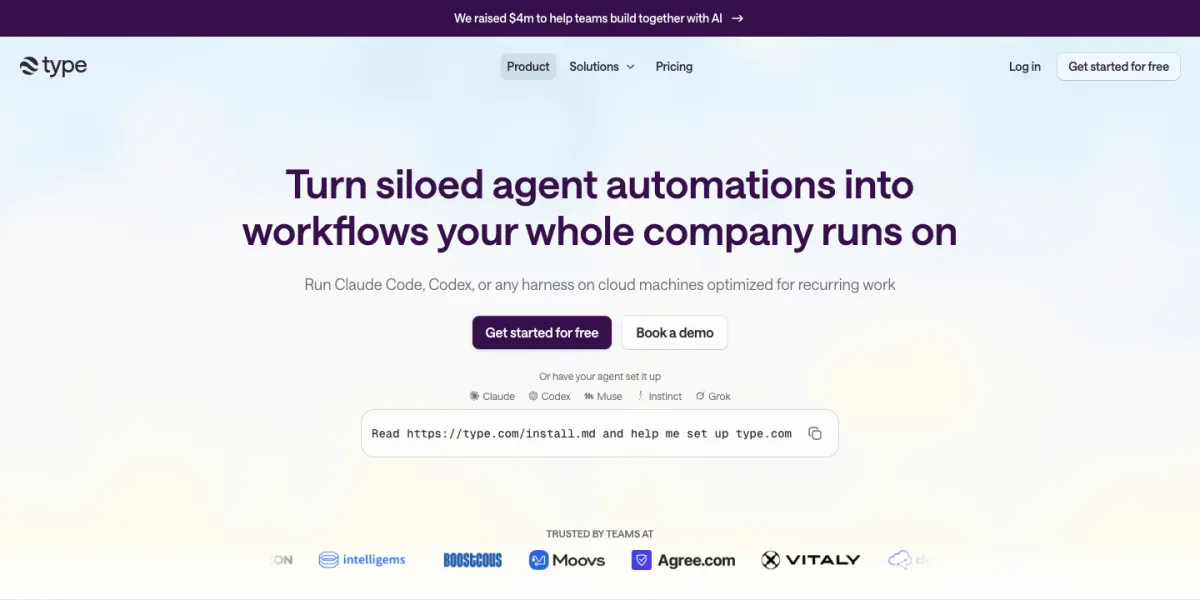 type.com runs Claude Code and Codex automations on cloud machines for the whole team.
Launched in September 2026, Type is a managed-agent platform for turning one person's AI workflow into something the whole company can trigger. A power user sets up an automation using Claude Code or Codex harnesses, and each agent gets its own sandboxed cloud VM with a filesystem, shell and browser. Teammates can then trigger runs from Slack, Microsoft Teams, email, Linear, GitHub (where it commits to branches and opens PRs), a webhook or a schedule. Compared with Viktor, Type is the clearest cloud answer to "how do we stop paying for AI twice?"
What stands out
- Bring your own subscriptions: Team members can connect their existing Claude or Codex subscriptions so eligible runs don't consume Type credits.
- Transparent credit math: When you do use Type's credits, one credit equals $1 of model usage at the provider's standard API rates.
- Multi-surface triggers: Works across Slack, Teams, GitHub, Linear, email and RSS.
Worth knowing
- Plans have tight member caps (2 members on Basic, 4 on Pro), and the VMs run in Type's cloud.
- Write actions aren't approval-gated by default, so your builder has to design those guardrails into the workflow.
Pricing: Basic is $50 a month (2 members, 100 AI credits) and Pro is $100 a month (4 members, 200 credits), with a 14-day trial (pricing, seen on October 27, 2026).
5. Dash
Best for keeping Viktor's model with stricter approvals.
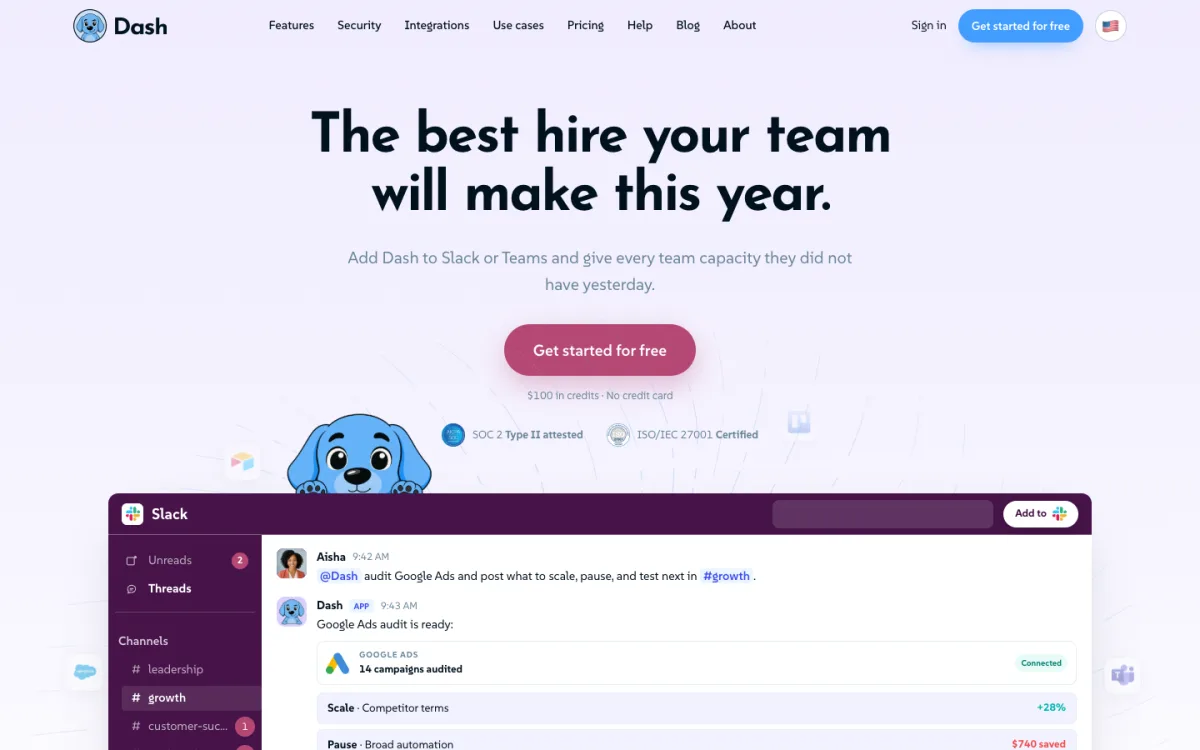 Dash, from Process Street, keeps the Viktor model and asks before every write.
Built by the team at Process Street, Dash is an AI teammate in Slack and Microsoft Teams that connects to 3,000+ tools via one-click OAuth. If you like how Viktor works day to day and just want tighter safety rails and completed compliance audits, Dash is the closest like-for-like swap on the market.
What stands out
- Approval-first defaults: Dash asks before sending, posting, writing or spending, keeps destructive actions off by default, holds GitHub writes for approval, and refuses history-rewriting git pushes (changelog).
- Enterprise-ready security posture: Runs in an isolated cloud sandbox with an admin-configured network policy and holds SOC 2 Type II certification (security).
- Lower entry price: Starts at $50 a month for unlimited members, and unused monthly credits roll over.
Worth knowing
- It uses almost the exact same credit math as Viktor (100 to 400 credits for quick tasks, 2,000 to 6,000 for projects), so your monthly bill is just as variable.
- The product is still young, with public changelog entries starting in June 2026.
Pricing: free to try with $100 in credits and no card, then Team plans start at $50 a month for 20,000 shared credits with unlimited members (pricing, seen on October 27, 2026).
6. OpenTag
Best for a coworker that picks the model for each request.
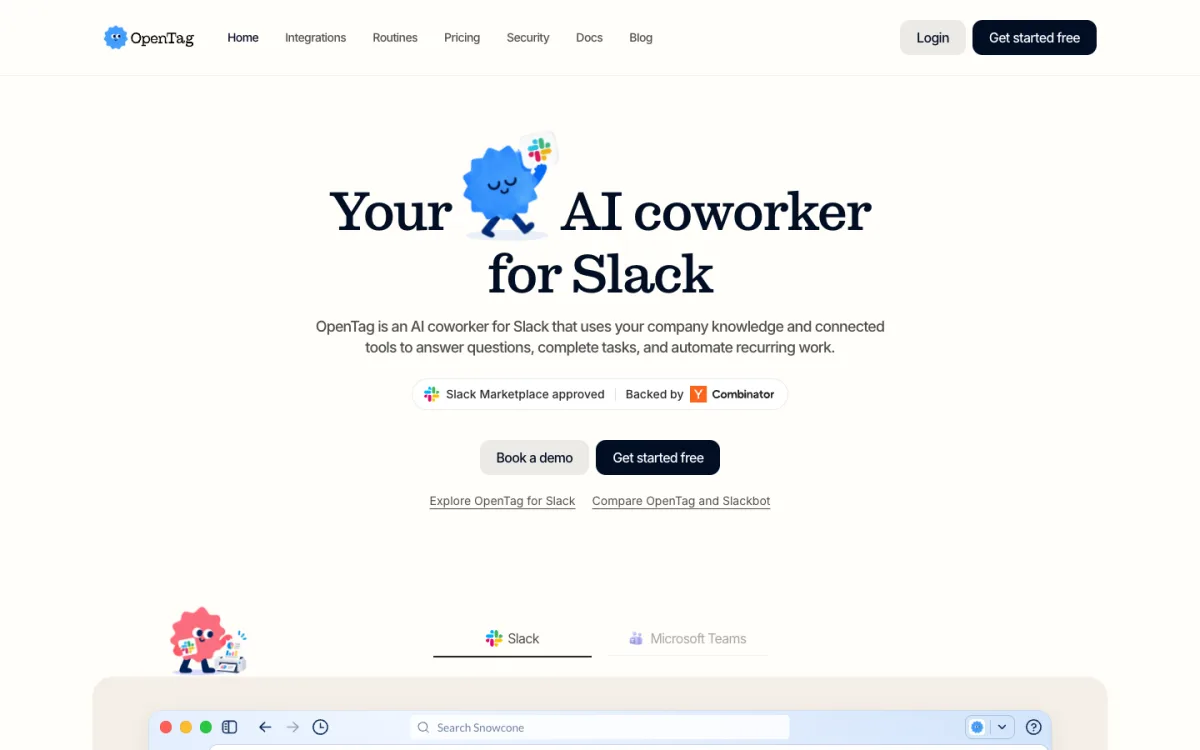 OpenTag matches each request to one of 40+ models.
OpenTag, which launched on Product Hunt in August 2026, is a Slack coworker that connects to your company knowledge and SaaS tools, runs scheduled or event-driven routines, and matches every prompt to one of 40+ models across Claude, GPT, Gemini, Grok and DeepSeek (choosing models). Compared with Viktor, it keeps the no-seat workspace credit model and fixes the wide-open access problem by enforcing per-person permissions out of the box.
What stands out
- Asker-level permissions: Every job runs within the permissions of the person who asked in Slack, and actions with real consequences stop for approval (how a job runs).
- Automatic model routing: Picks the model per task automatically, while still letting admins override the choice per channel.
- Cloud coding handoff: Can delegate engineering tasks to a Conductor cloud coding agent with its own branch and workspace.
Worth knowing
- OpenTag's native GitHub integration is read-only, so shipping code requires bringing your own Conductor account and API key.
- It only supports Slack today, with Microsoft Teams listed as coming soon.
Pricing: billed per workspace in shared credits with no seat fees, starting at $50 a month for 10,000 credits (up to $500 for 110,000 credits) with a 7-day trial (pricing, seen on October 27, 2026).
7. Rerun
Best low-cost start for small businesses and agencies.
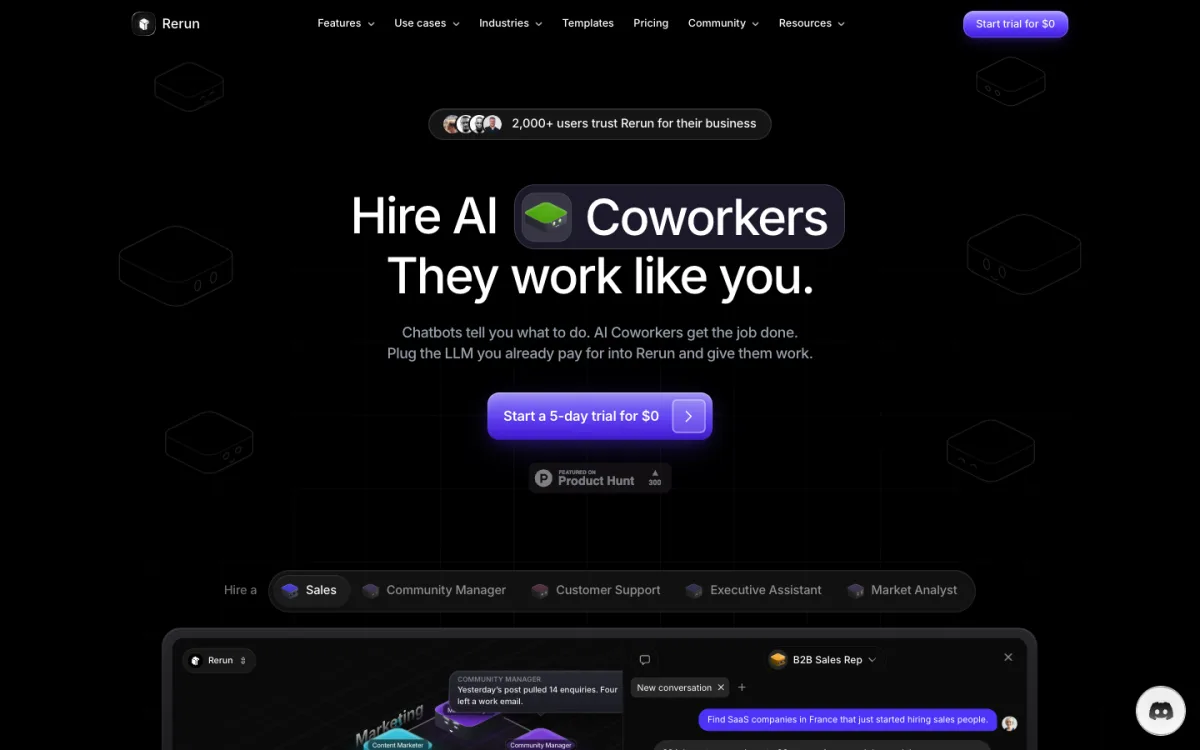 Rerun lets you plug in the AI subscription you already pay for.
Rerun lets you spin up role-based AI "Coworkers" from templates like Paid Acquisition Manager, SEO Strategist or Executive Assistant. Each workspace gets its own isolated cloud machine in Europe running 24/7, waking up on cron schedules, webhooks or incoming messages. Compared with Viktor, Rerun gives you a much lower starting price and lets you use your existing AI subscriptions, in exchange for managing your coworkers in Rerun's web app rather than living entirely inside Slack.
What stands out
- No double-paying for models: You can connect your own Claude or ChatGPT subscription or API keys, and runs on your subscription don't touch your Rerun credits (billing docs).
- Dedicated European machine: Every workspace gets an isolated VM hosted in Europe.
- Built-in pause for high-stakes steps: Pauses for human approval before spending money, emailing clients or deleting data.
Worth knowing
- You primarily talk to Coworkers inside Rerun's own app (Slack is a connected tool rather than the primary home), and it isn't built for software engineering.
- It is built by a two-person team (as stated on Rerun's site), and your procurement team may weigh the small company size.
Pricing: Pro is $29 a month for 5 Coworkers, unlimited human teammates and 500 credits (with add-ons at $10 for 5 more Coworkers or 1,000 credits) and a 5-day trial (pricing, seen on October 27, 2026).
8. Lindy
Best for ops and GTM teams that want one coworker across Slack, email and iMessage.
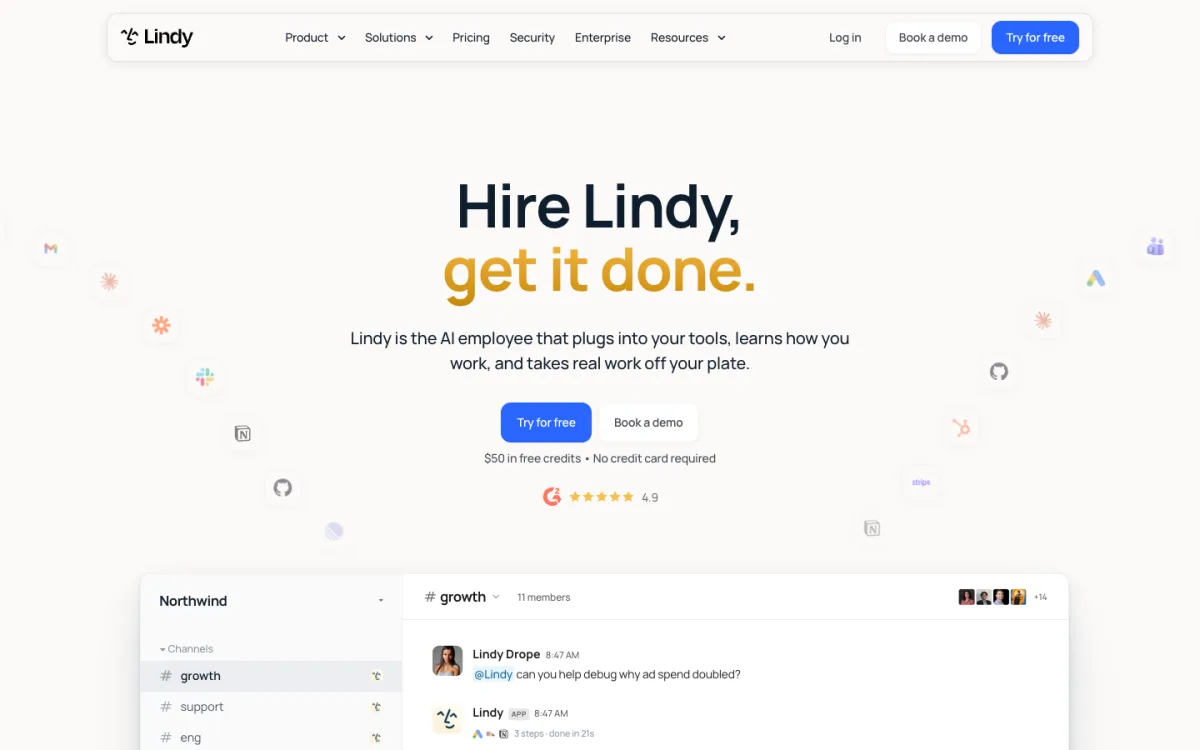 Lindy is one shared coworker across Slack, email, iMessage and meetings.
Lindy pitches one shared AI employee for the whole team across Slack, email, iMessage, voice notes, meetings and a browser extension (docs). It connects to 1,500+ tools plus MCP servers, comes with 40+ skills for research, data analysis and decks, and builds interactive dashboards and apps as live Artifacts. Compared with Viktor, Lindy reaches far beyond team chat into email and text messages, and keeps its memory in plain files you can actually read and edit.
What stands out
- Editable plain-file memory: What Lindy learns about your team compounds across channels, and anyone can inspect or edit the underlying memory files.
- Omnichannel reach: Works in Slack threads, on calls, over email and in iMessage, asking for approval before irreversible actions.
- Clear credit pricing: Credits pool across the workspace at a flat rate of $0.01 per credit (pricing docs).
Worth knowing
- Unlike Viktor's workspace-only pricing, Lindy bills per active user.
- It doesn't ship code, Microsoft Teams is still marked coming soon, and new Slack installs require a paid Slack workspace.
Pricing: 7-day trial with $50 in free credits, then Team is $29.99 a month per active user with 3,000 pooled credits per user (pricing, seen on October 27, 2026).
9. Stilla
Best flat price across the most surfaces, with a Meta asterisk.
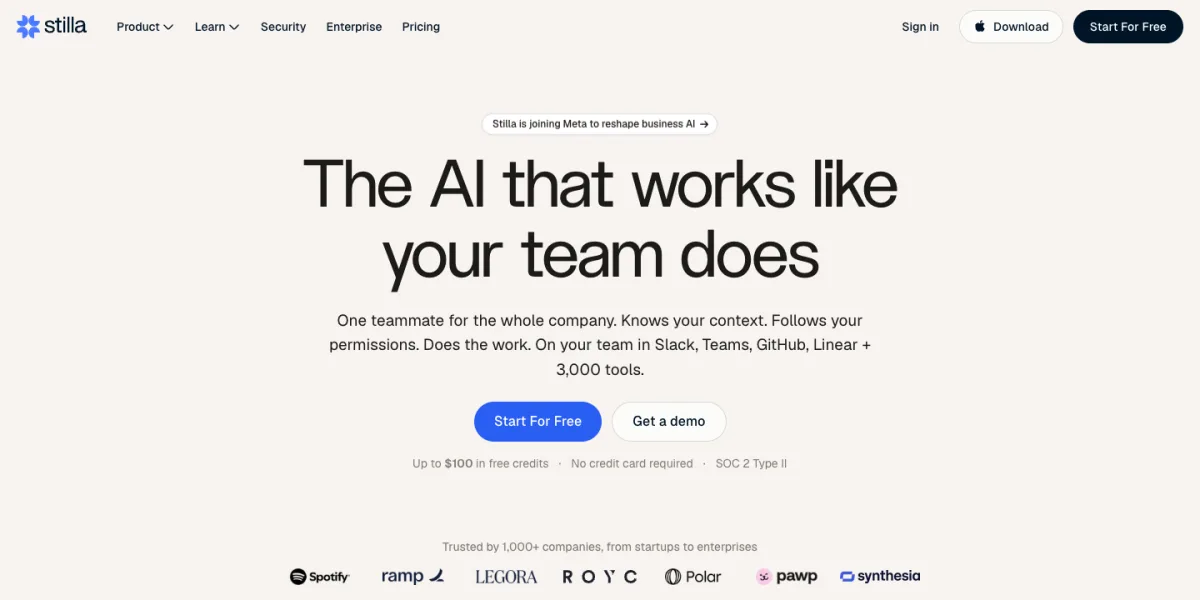 Stilla's homepage leads with the news that it is joining Meta.
Stilla gives every task its own sandboxed cloud computer and shows up across Slack, Microsoft Teams, GitHub, Linear, Discord, email and meetings. On the engineering side, it reviews code, suggests fixes, opens pull requests and replies to PR comments, and it already holds SOC 2 Type II certification. Compared with Viktor, it covers more surfaces for a lower base price, provided you are comfortable with its recent acquisition news.
What stands out
- Broad surface coverage: One teammate across chat, tickets, code repos, email and meetings.
- Low flat org base: $40 a month covers up to 29 team members before credit tiers kick in.
Worth knowing
- On September 9, 2026, Stilla announced it is joining Meta. The team states that service is continuing, though any long-term commitment will likely trigger questions from your procurement team.
- The Team plan caps at 29 members.
Pricing: $40 per organization per month for up to 29 members, with $100 in free credits to start and usage credit tiers on top (homepage, seen on October 27, 2026).
10. Dust
Best for building a fleet of governed, purpose-built agents.
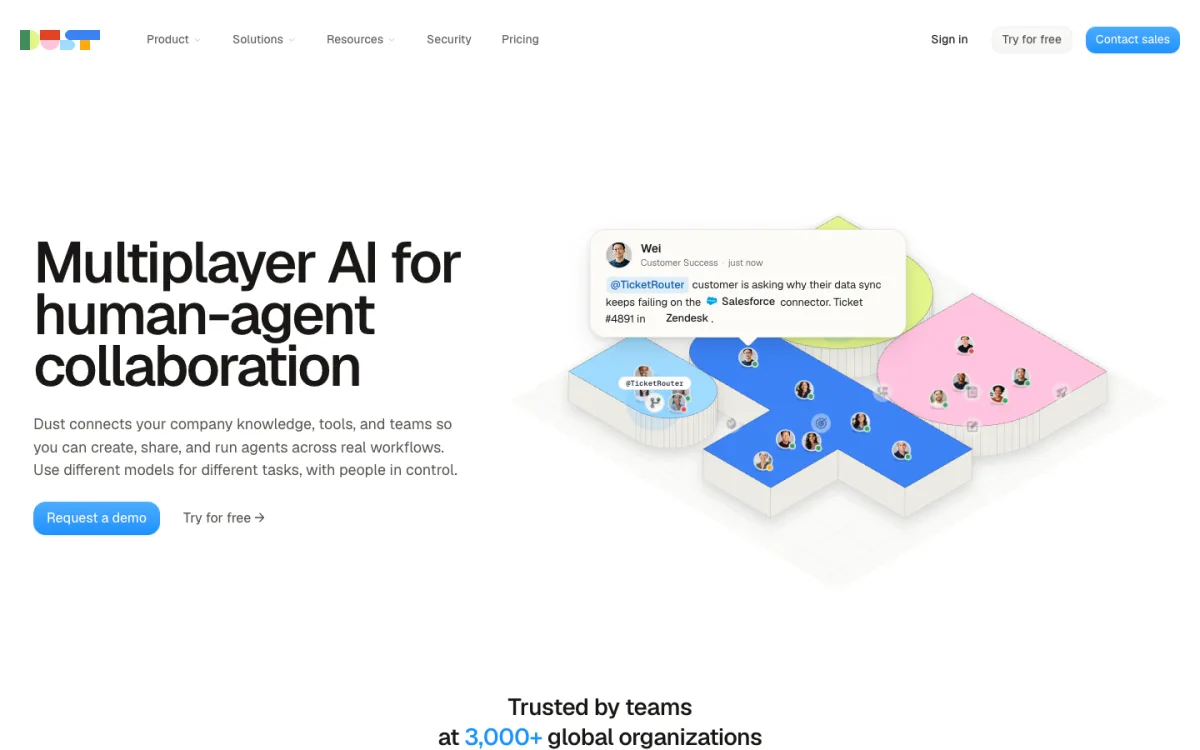 Dust is built for designing many purpose-built agents.
Backed by a $40M Series B led by Sequoia and Abstract in May 2026, Dust is a platform for designing specialized company agents (like @TicketRouter or @SalesPrep) across 20+ models from OpenAI, Anthropic, Google, Mistral and DeepSeek. You can call them in Slack or Microsoft Teams. Compared with Viktor, Dust gives you much stronger governance and European data residency, with less of Viktor's "ask one generalist hire to build and host an app" magic.
What stands out
- Serious compliance and residency: Choose US or EU hosting, with single-tenant deployment available on Enterprise (security).
- Isolated user memory: Agent memory stays private to each user, avoiding accidental cross-workspace leaks.
Worth knowing
- Its GitHub connector syncs issues, PRs and code for reading only, so it won't ship pull requests.
- Someone on your team has to build and curate the custom agents.
Pricing: a free tier with 500 credits, then Pro starts at €24 per seat per month billed yearly (€30 monthly) and Max at €120 per seat (pricing, seen on October 27, 2026).
11. Slackbot
Best if you want no new vendor at all.
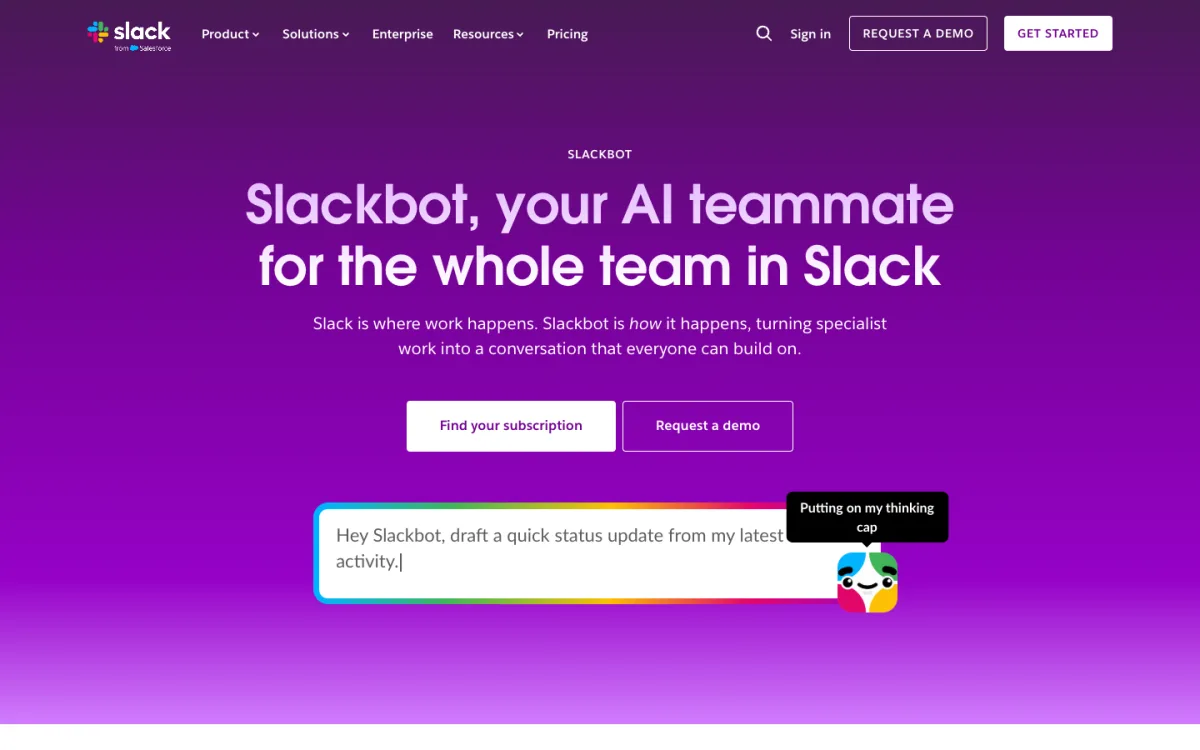 Slackbot comes with Slack's Business+ and Enterprise+ plans.
If security or finance vetoed Viktor, Slackbot is already inside the building. It searches Slack messages, files, connected apps (like Jira, Figma, Salesforce and Docusign) and the web, returns cited reports, supports MCP and custom skills, and logs an audit trail with human-in-the-loop approval for actions. Compared with Viktor, it's already paid for and approved by IT, though it behaves like a personal assistant rather than an autonomous coworker that builds apps end to end.
What stands out
- Zero procurement friction: Included in your existing Slack Business+ or Enterprise+ contract and inherits your Slack permissions immediately.
- Partner coding ecosystem: While Slackbot doesn't write code itself, Slack Code hosts partner coding agents from Anthropic, Devin, GitHub Copilot, OpenAI and Vercel.
Worth knowing
- Calling Slackbot inside shared channels was only announced as an early pilot at Dreamforce in September 2026, so most work still happens in your private sidebar.
- Business+ caps you at a weekly message limit.
Pricing: included with Slack Business+ at $15 per user per month billed annually (with a weekly message limit) and unlimited on Enterprise+ (Slack pricing, seen on October 27, 2026).
12. ChatGPT (Dots)
Best for teams already paying for ChatGPT.
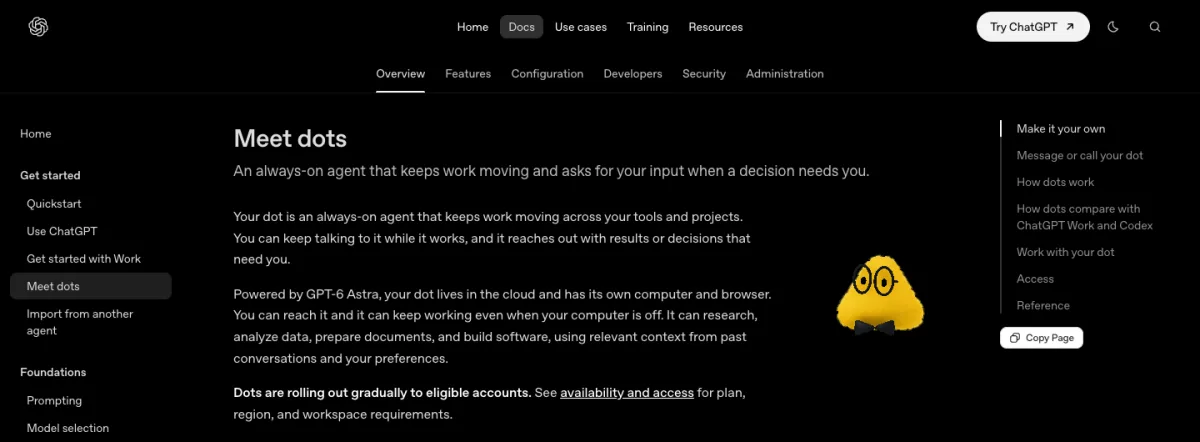 A dot is one person's always-on agent with its own cloud computer.
Announced on September 29, 2026, Dots is OpenAI's always-on agent powered by GPT-6 Astra. Your dot gets its own cloud computer and browser, can be DM'd or mentioned in Slack channels and Microsoft Teams, and runs a built-in review step to decide whether to proceed or ask for your approval. Meanwhile, the @ChatGPT Slack app can hand repository tasks off to Codex Cloud and post the result back in the thread. Compared with Viktor, Dots sits inside an OpenAI subscription you may already pay for, though each dot belongs to one person while Viktor is shared across the workspace.
What stands out
- Own cloud computer included: Bundled into ChatGPT Pro (and rolling out to Business Premium and Enterprise) without a separate credit vendor.
- Codex Cloud handoffs: Can take code tasks from a Slack thread and run them against your GitHub repositories.
Worth knowing
- A dot is personal to one user rather than a shared team coworker with shared memory.
- Rollout is gradual, OpenAI models are your only option, and Pro availability excludes the EEA, UK and Switzerland.
Pricing: included with ChatGPT Pro plans at $100, $200 or $500 a month, and rolling out to Business Premium and Enterprise (ChatGPT pricing, seen on October 27, 2026).
How to choose a Viktor alternative
Roundups like this are a starting point. To narrow the list down to two or three trials, run through these three questions in order:
- Why are you leaving Viktor? If it's the unpredictable credit bill, look at products that run on existing subscriptions (Merlin, Type, Rerun, Slackbot, ChatGPT). If you need serious code shipping in GitHub and Linear, start with Merlin, Indent or Claude Tag. If you want the exact same model with stricter approvals and SOC 2 Type II, try Dash, or pick OpenTag for per-person permissions.
- Does the work need your real environment? Cloud sandboxes are easy to turn on, and they start empty. If the job touches local repositories, internal databases, VPN-protected services or the MCP servers your engineers already configured, pick an agent that can run on your own machines (Merlin or Indent's desktop mode).
- Who should pay for the model? If your team already pays Anthropic or OpenAI every month, paying a wrapper startup's credit pool for the same tokens hurts. Merlin, Type and Rerun let you use the plans you already have.
Four things most lists skip
- Credits hide the per-project cost. Translating credits into dollars before you start a trial saves an awkward finance conversation in week three. On Viktor and Dash, a single complex project runs $5 to $15.
- "Opens a PR" and "runs your test suite" are worlds apart. Lots of cloud agents can call the GitHub API to propose a file edit. Very few can run your local build, catch a failing linter rule, fix it and push a green commit.
- Workspace-wide OAuth is a quiet security trap. Before you connect Gmail, Notion or HubSpot to a shared Slack agent, check whether every intern in the workspace can ask the bot to summarize your private messages. OpenTag, Dust, Slackbot and Merlin all give you ways to scope who can run or see what.
- Personal agents and team coworkers solve different problems. Slackbot and ChatGPT's Dots are built around one user's identity. Merlin, Viktor, Indent and Dash are built for multiplayer threads where the whole channel can watch and steer the work.
FAQ
Viktor (viktor.com) is an AI coworker that lives in Slack, Microsoft Teams and Discord and runs tasks on its own cloud sandbox computer. Teams use it to generate reports, dashboards, marketing campaigns, hosted internal web apps (Viktor Spaces) and pull requests across 9,800+ connected tools, billed in shared workspace credits.
Viktor gives new workspaces up to $100 in free credits, and paid Team plans start at $50 a month for 20,000 shared credits or $100 a month for 40,000 credits (Viktor pricing). That works out to $0.0025 per credit across every tier, so a quick task (100 to 300 credits) costs $0.25 to $0.75 and a full project (2,000 to 5,000 credits) costs $5.00 to $12.50.
Unused monthly plan credits on Viktor roll over for one month, and free or bonus credits never expire. If you want another rollover policy or a fixed subscription bill, Dash says unused credits roll over, and Merlin, Type and Rerun let you run work on your existing Claude or ChatGPT plans.
Only what you expose to its cloud. Viktor runs every workspace in a sandboxed environment on AWS us-east-1 with no self-hosted or VPC option, so it reaches SaaS tools through OAuth connectors. If you need an agent that works with local repositories, private databases or internal dev environments, Merlin runs on your team's own machines via an outbound connection.
If your engineers already use Claude Code or Codex, Merlin is the strongest fit: it brings their real local setup into Slack, Linear and GitHub without adding a second model bill. If you prefer a cloud sandbox, Indent is built specifically to turn Slack and Linear threads into tested pull requests, and Claude Tag is great for shops already on Claude Team or Enterprise.
Yes, three of them do. Merlin runs work through the Claude Code or Codex installed on your teammates' machines, keeping all model usage on each machine owner's own Claude or ChatGPT plan. Type and Rerun both run in the cloud and let you connect an existing Claude or ChatGPT subscription so eligible runs don't consume vendor credits.
Dash, Type, Stilla, Dust and ChatGPT's Dots all support Microsoft Teams today. OpenTag and Lindy both list Microsoft Teams as coming soon, while Merlin, Claude Tag, Indent and Slackbot focus on Slack (with Merlin also working natively in Linear and GitHub).
Match the tool to the reason you started looking: pick Merlin, Indent or Claude Tag if your work centers on code, Type or Rerun if you want to bring your own AI subscription in the cloud, or Dash and OpenTag if you like Viktor's credit model and just want tighter permissions.
Try Merlin for free
Hand work to Claude Code and Codex from Slack, Linear and GitHub. Free for 14 days, no API keys, no card required.
Get started for free